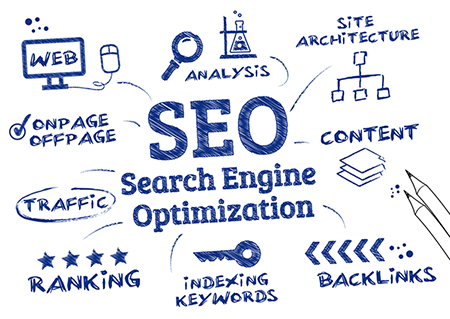
SEO
Search engine optimization (SEO) is the process of improving the volume and quality of traffic to a website from search engines via “natural” (“organic” or “algorithmic”) search results for targeted keywords. Usually, the earlier a site is presented in the search results or the higher it “ranks”, the more searchers will visit that site. SEO can also target different kinds of search, including image search, local search, and industry-specific vertical search engines.
________________________________________
As a marketing strategy for increasing a site’s relevance, SEO considers how search algorithms work and what people search for. SEO efforts may involve a site’s coding, presentation, and structure, as well as fixing problems that could prevent search engine indexing programs from fully spidering a site. Another class of techniques, known as black hat SEO or spamdexing, use methods such as link farms and keyword stuffing that tend to harm search engine user experience. Search engines look for sites that employ these techniques and may remove them from their indices.
Using SEO increases your ROI tremendously over PPC (Pay Per Click) campaigns however, that is not to say that PPC are not used.The following are the two main reasons why SEO give you a better return:
More searchers click the natural search engine results versus the pay per click ads, so you’ll get much more traffic for less.
One of the biggest factors to improving your rankings with natural search engine optimization is by boosting your “Link Popularity” by acquiring or paying for links that point to your website. These links give you lasting results by giving you top rankings and traffic from the search engines. Plus, the links themselves will provide a significant boost in long term traffic.
SEO Includes the following:
| Reviewing and providing recommendations on your site content or structure | |
| Technical advice on website development: for example, hosting, redirects, error pages, use of JavaScript | |
| Managing online business development campaigns | |
| Unique and compelling content | |
| Directory submission | |
| Blogging | |
| Press releases | |
| Article submissions | |
| Social networking | |
| Keyword research | |
| SEO training |
Pay per click (PPC) is an internet advertising model used on search engines, advertising networks, and content websites, such as blogs, where advertisers only pay when a user actually clicks on an advertisement (ad) to visit the advertisers website. Advertisers bid on keyword phrases relevant to their target market. When a user types a keyword query matching an advertisers keyword list, or views a webpage with relevant content, the advertisers ads may be displayed. Such ads are called a sponsored links or sponsored ads, and appear adjacent to or above the “natural” or organic results on search engine results pages, or anywhere a webmaster or blogger chooses on a content page.
Although many PPC providers exist, Google AdWords, Yahoo! Search Marketing, and Microsoft adCenter are the largest network operators as of 2007. Minimum prices per click, often referred to as costs per click (CPC), vary depending on the search engine and the level of competition for a particular phrase or keyword list — with some CPCs as low as $0.01 USD. Very popular search terms can cost much more on popular search engines.
The biggest benefit of pay per click is the fact that it will provide you with an immediate boost of qualified visitors, lead and sales giving you fast results within just hours or days. In fact, a pay per click advertising program is your best option if you seek fast results and a good return on investment while you are waiting for your Search Engine Optimization (SEO) program to “ramp up”.